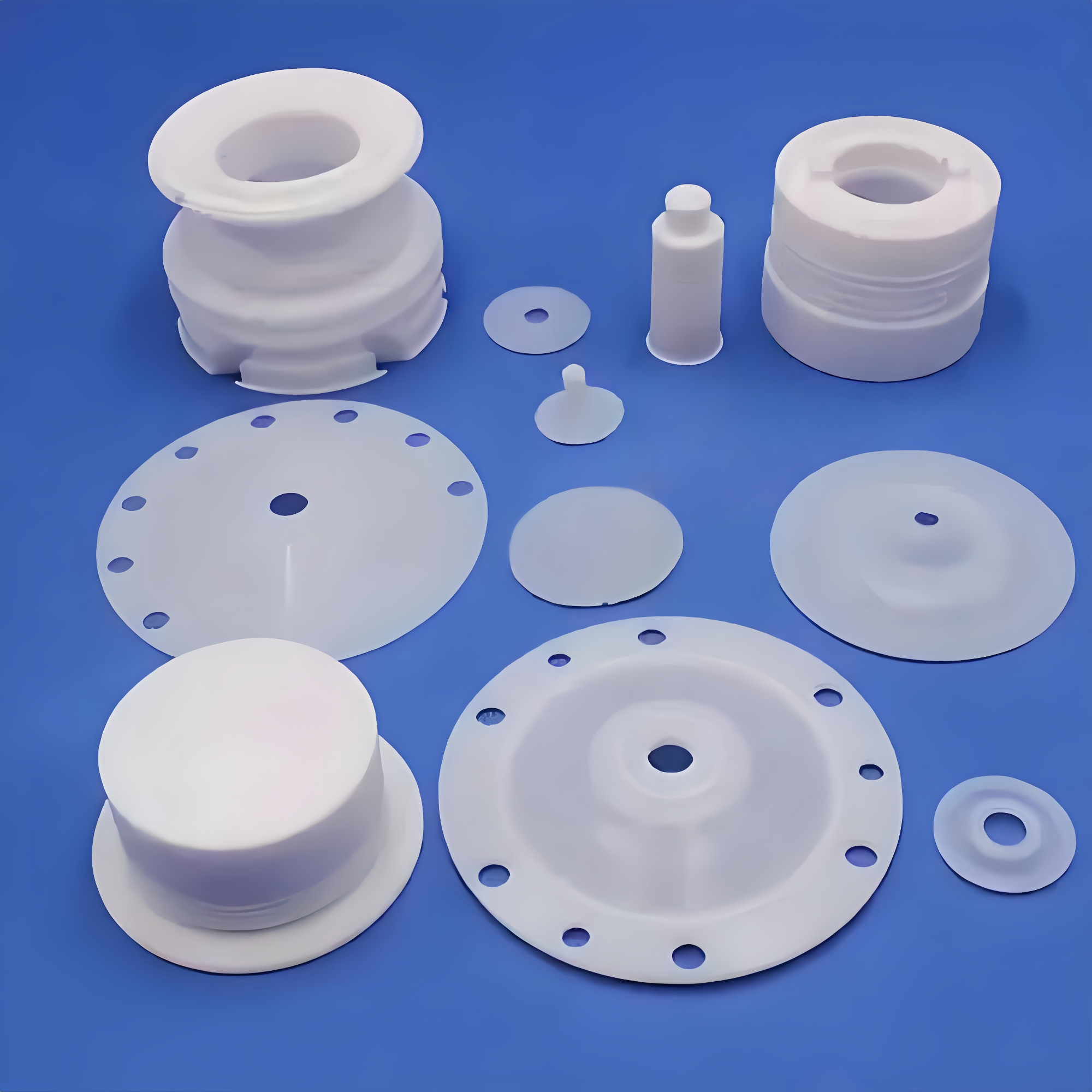

Essential details
Quantity(pieces):1000
MOQ:20-10000
Lead time:依据实际订货量
Shipping:Express Delivery
Specification Number:CH010
Package Description:有防碰撞气泡垫避免产品磕碰
Product Introduction
Core Performance Advantages
The application of PTFE in the automotive industry relies on four key properties:
- High-Temperature Resistance: Operating range -200°C to +260°C, with instantaneous tolerance up to 315°C (e.g., engine bay seals).
- Chemical Inertness: Resists fuels, motor oils, brake fluids, coolants, and strong acids/alkalis (e.g., 98% sulfuric acid, liquid chlorine).
- Low Friction Coefficient (0.04): Self-lubricating properties reduce mechanical wear and energy consumption.
- Electrical Insulation: Dielectric strength **>50 kV/mm**, suitable for high-voltage electrical systems.
II. Key Application Scenarios & Component Categories
1. Powertrain Components
2. Transmission & Chassis Components
- Bearings/Slides: Power window rails, seat adjustment bearings – maintenance-free and noise-reducing.
- Transmission Seals: Resists gear oil corrosion, extends oil change intervals to 100,000 km.
- Braking System: Brake cylinder seals – corrosion-resistant to brake fluids with stable high-pressure sealing.
3. Electrical & Emerging Systems
- High-Voltage Wiring Insulation: Flame-retardant and arc-resistant, ensures EV battery safety.
- Hydrogen Fuel Cells: Proton exchange membranes (ePTFE) and seals – resistant to hydrogen embrittlement.
- Sensor Protective Sleeves: Dust/waterproof, ensures ADAS system reliability.
PTFE transforms from "passive sealing" to "active performance enhancement" in automotive engineering, solidifying its role as a critical material in the smart electrification era.